
The Jaguar
The forest has a predator, and it knows every name.

Wikimedia Commons · CC BY-SA 3.0
The Jaguar is one of the most unsettling and recurring presences in the world of Yellowjackets. What begins as a straightforward predator in the wild quickly takes on a mythic, almost sentient quality, threading itself into the show's exploration of the 'Other Side'—the liminal, psychic realm that bleeds through the natural world. Across multiple seasons, the jaguar returns as a harbinger, a mirror, and a force that the characters cannot fully rationalize. It is never simply an animal; it is the wilderness made flesh, a reminder that the forest the girls are trapped in operates by rules far older and stranger than survival. Fans frequently cite the jaguar's appearances as the moments where Yellowjackets shifts from grounded drama into something genuinely uncanny.
- Type
- Recurring entity / supernatural motif
- First appears
- Season 1, 1996 timeline
- Affiliation
- The wilderness / the 'Other Side'
- Nature
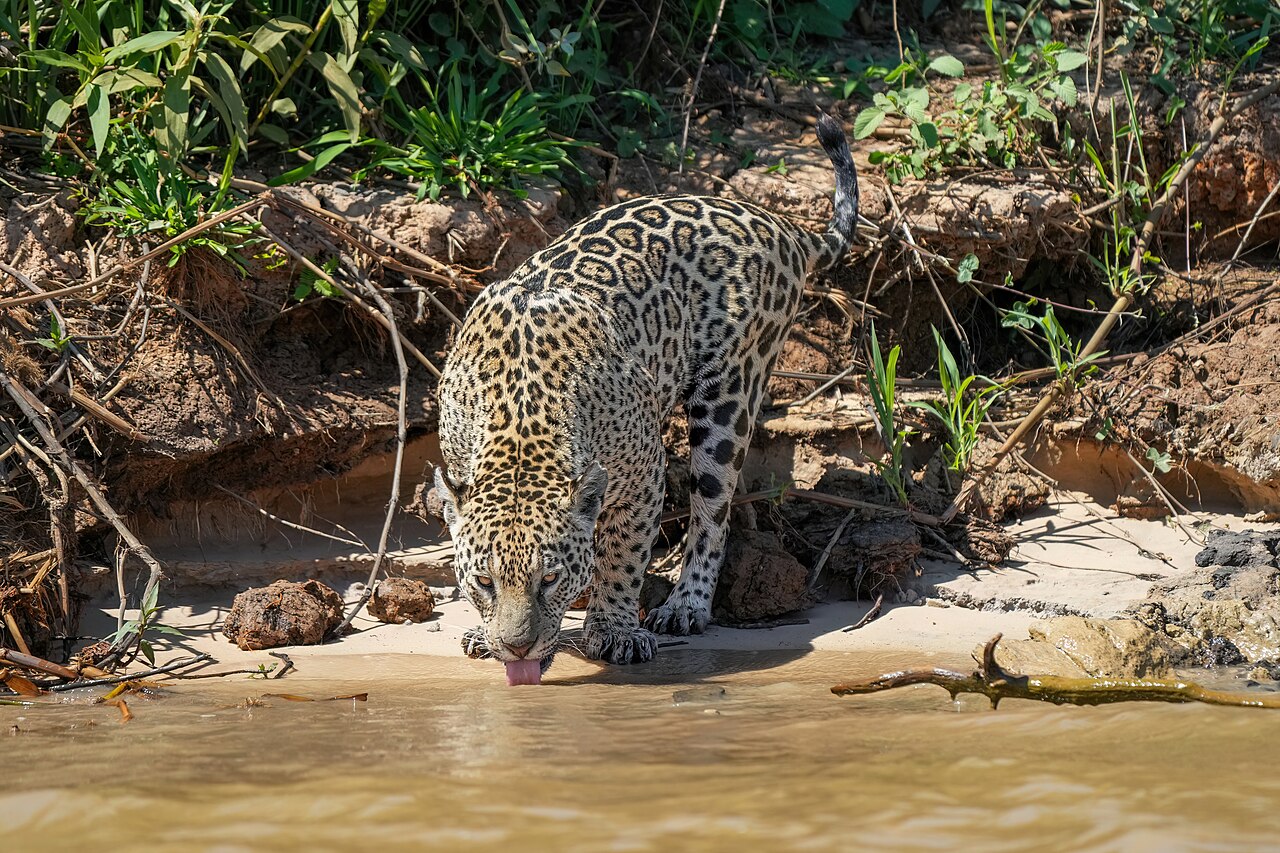
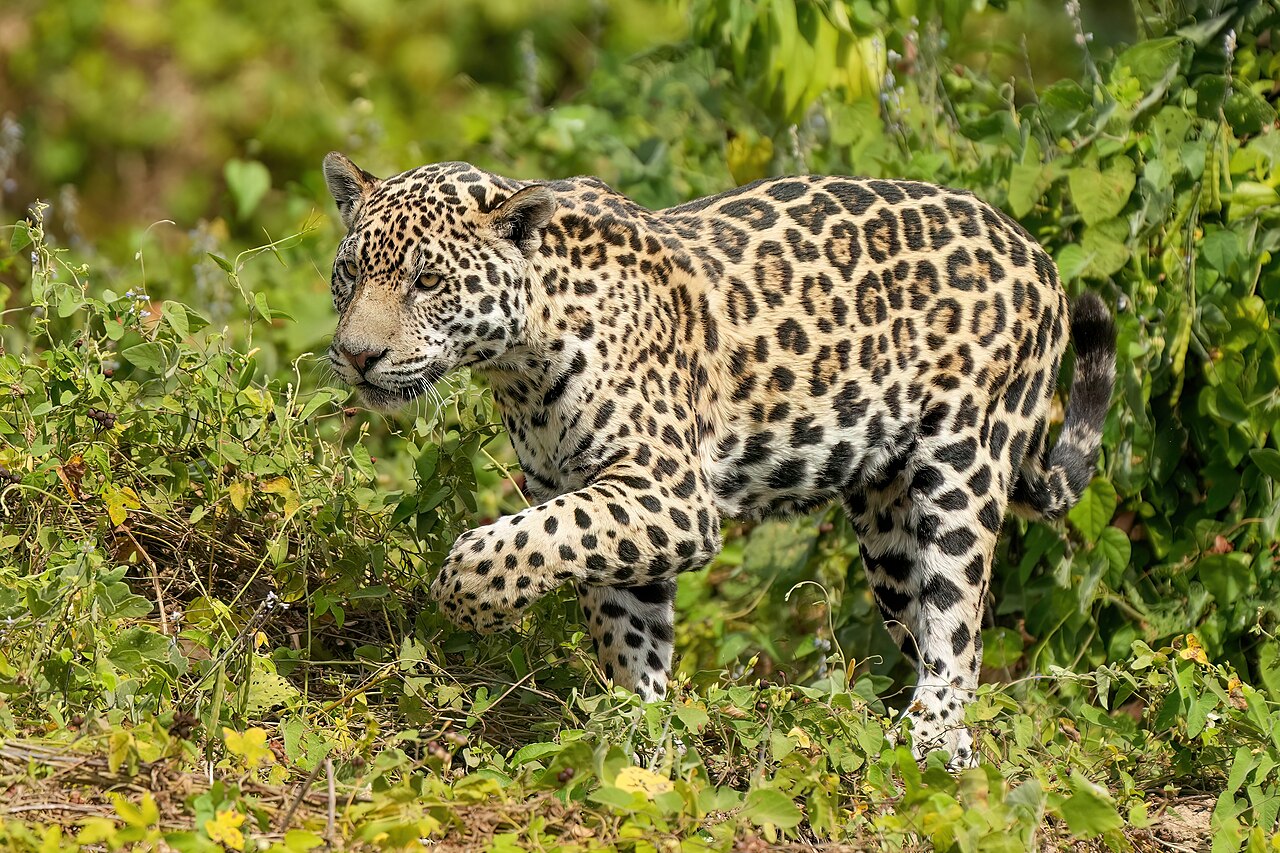
- Real jaguar (Panthera onca) imbued with mythic significance
- Status
- Recurring across multiple seasons
- Associated themes
- Danger, transformation, the unknown, the liminal
Lore & Background
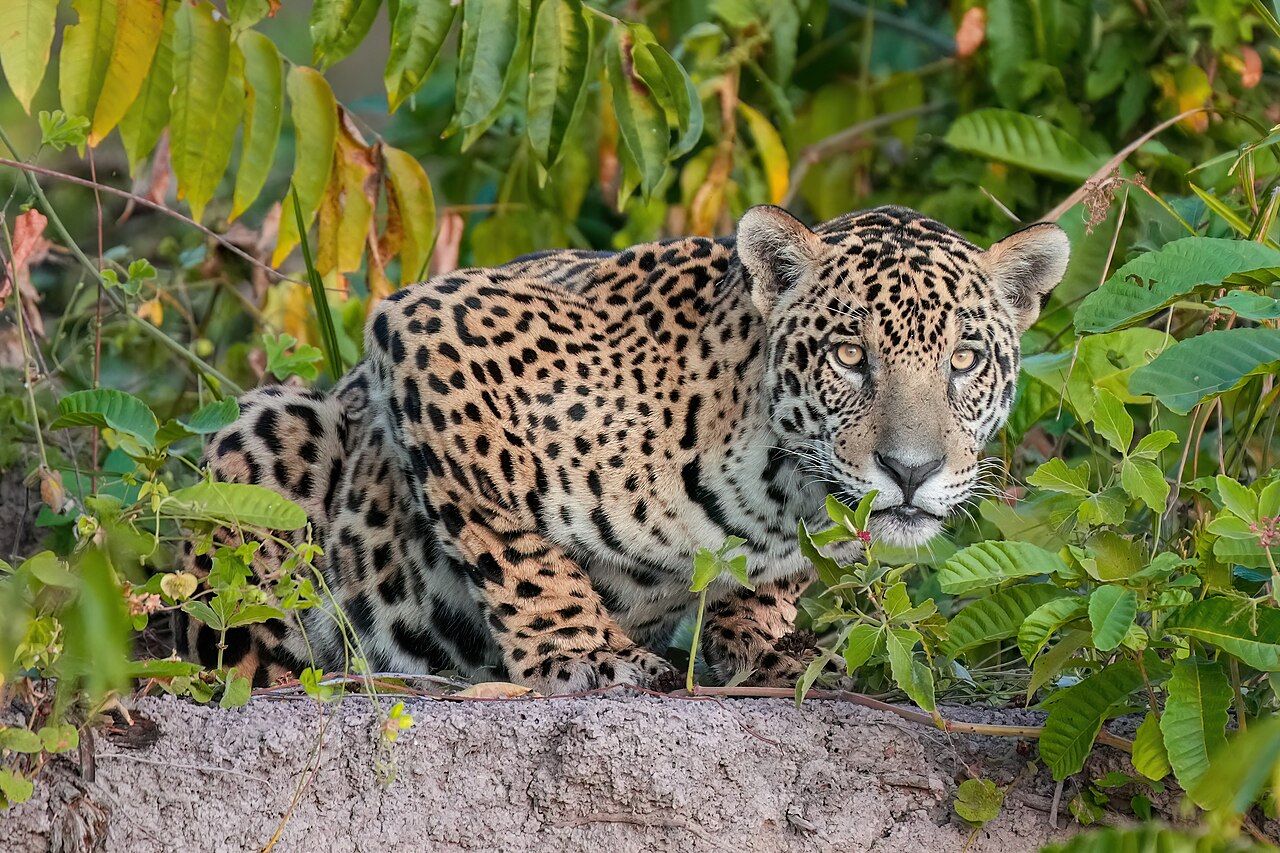
In the 1996 timeline, the jaguar first surfaces as a tangible, flesh-and-blood threat stalking the girls through the overgrown terrain. It is large, deliberate, and unnervingly calm—watching rather than merely hunting. The survivors react with a mix of animal terror and a strange, almost magnetic fascination, as though the creature is less a beast and more a threshold they are being forced to cross. The show frames these encounters with a visual language that blurs the line between documentary realism and fever dream: the jaguar's eyes catch light in a way that feels choreographed, its movements almost too precise for a wild animal. As the series progresses, the jaguar's appearances become less about immediate physical danger and more about foreshadowing and psychological weight. It surfaces at pivotal moments—before a death, before a revelation, before a character's identity begins to fracture. The 'Other Side,' that recurring psychic and spiritual layer the show builds around the survivors, seems to use the jaguar as one of its most legible symbols. It is the part of the wilderness that cannot be mapped, tamed, or explained away with a survival manual. In the modern timeline, echoes of the jaguar persist in the survivors' memories, nightmares, and the strange sensory disturbances that connect them across decades. Whether the jaguar is a literal animal, a manifestation of the Other Side, or a metaphor for the part of themselves the girls cannot outrun remains deliberately ambiguous. The show never fully commits to one reading, and that ambiguity is part of its power. The jaguar does not speak, does not negotiate, and does not leave. It simply is, and its presence reorders everything around it.
In Their Own Story
The mist rolls in off the ridge like something breathing. Liane has stopped walking. The others have stopped walking. Nobody says why. The undergrowth is thick, wet, the kind of green that swallows sound. And there, twenty yards out, sitting on a flat stone with its weight balanced on all four paws, is the jaguar. It is not crouched. It is not coiled. It is sitting the way a person sits in a chair, patient, its amber eyes fixed on the group with an attention that feels personal, almost curious. The air tastes like iron and wet bark. One of the girls whispers a word—maybe a name, maybe a prayer. The jaguar blinks, slow and deliberate, and the mist thickens until the stone and the stone's passenger are both gone, and the forest is just a forest again, and nobody moves for a very long time.
Reader's Guide
Treat the jaguar as a rule the wilderness enforces, not a power any character wields. What it does: The jaguar marks a threshold. When it appears, the boundary between the physical world and the 'Other Side' thins. It does not attack in the conventional sense; it observes, it waits, it reorients the survivors toward a truth they are not ready to face. Its presence is a signal that something in the group is about to shift—lose a person, lose an identity, lose the story they've been telling themselves. Who can access it: No one chooses the jaguar. It finds the group. It is not a tool, not a summon, not a companion. It is an event. The survivors can only react, and their reactions—fear, awe, denial—determine how the encounter reshapes them. What it demands: The cost is not blood, exactly. It is certainty. Every time the jaguar appears, the survivors lose a piece of the rational explanation for their situation. They must accept that the wilderness is not merely hostile but *aware*, and that the rules of the world they knew no longer fully apply. The demand is epistemic: you must stop pretending you understand where you are. How it escalates: In Season 1, the jaguar is a physical threat in the 1996 timeline, a predator in the brush. By Season 2 and beyond, its appearances become more symbolic, more tied to the psychic and spiritual layer of the show. It foreshadows, it mirrors, it haunts. The modern-timeline survivors carry the jaguar in their memories as a wound that will not close. The escalation is from body to mind to something harder to name—a spiritual reckoning dressed in fur and teeth. Is it a character, a force, or a metaphor? The show refuses to pick one. It is all three simultaneously, and the refusal is the point. It is a character in the sense that it has presence, intention, and a narrative arc. It is a force in the sense that it operates on a level the characters cannot control or fully perceive. It is a metaphor in the sense that it externalizes the part of the survivors' experience that resists language. The jaguar is what happens when the forest stops being a setting and starts being a participant.
Did You Know?
- The jaguar (Panthera onca) is the largest feline native to the Americas, and its presence in a dense, misty wilderness is botanically and ecologically plausible for the kind of terrain the show depicts, grounding the sup
- The jaguar never speaks, never is explained by a character, and is never given a backstory. Its meaning is entirely constructed by the survivors' reactions and the show's visual and auditory framing, making it one of Yel
- The show's use of the jaguar draws on a long tradition in Southern and Central American folklore where the jaguar is a liminal being—a shaman, a trickster, a guardian of the boundary between the human world and the spiri
- In the 1996 timeline, the jaguar's encounters are shot with a grounded, almost documentary realism, while in later seasons the framing becomes more surreal, tracking the show's own shift from survival drama to psychologi
Gallery

Frequently Asked Questions
Who is The Jaguar?
The Jaguar is a recurring supernatural entity in Yellowjackets that first appears in the 1996 timeline as a predator stalking the stranded girls. Though it is physically a real jaguar (Panthera onca), the series treats it as something far more than an animal—essentially the wilderness itself given a body and a purpose.
What role does The Jaguar play in the story?
It functions as a harbinger and a living reminder that the forest the girls are trapped in follows rules no one can fully explain. Across multiple seasons it reappears as a mirror for the characters' fears and transformations, tying the natural world to the show's 'Other Side' mythology.
How does The Jaguar's story end?
The Jaguar doesn't receive a traditional narrative arc or a final confrontation; instead it persists as a recurring motif that surfaces whenever the story needs to remind the audience the wilderness is still watching. Its ongoing presence across seasons reinforces that the threat was never truly neutralized.
Why is The Jaguar important to Yellowjackets?
It anchors the show's central theme that the forest is not a passive backdrop but an active, almost sentient force with its own agenda. Every appearance of the jaguar escalates the sense that the girls are being tested, transformed, or consumed by something older than human understanding.
What does The Jaguar symbolize?
The jaguar embodies the liminal space between the natural and the supernatural, representing danger, forced transformation, and the unknown that the characters cannot rationalize or escape. It serves as the show's visual shorthand for the idea that the wilderness has its own will—and it knows every name.
More in Powers & Artifacts
Elsewhere in the Yellowjackets universe
Spotted an error? Know more?
This is a living reference — every entry is fact-audited, and reader corrections feed straight into our audit queue. Suggest an edit · See this site's audit record