
The Crash Site
Nineteen months in a forest that remembers you better than you remember yourself.

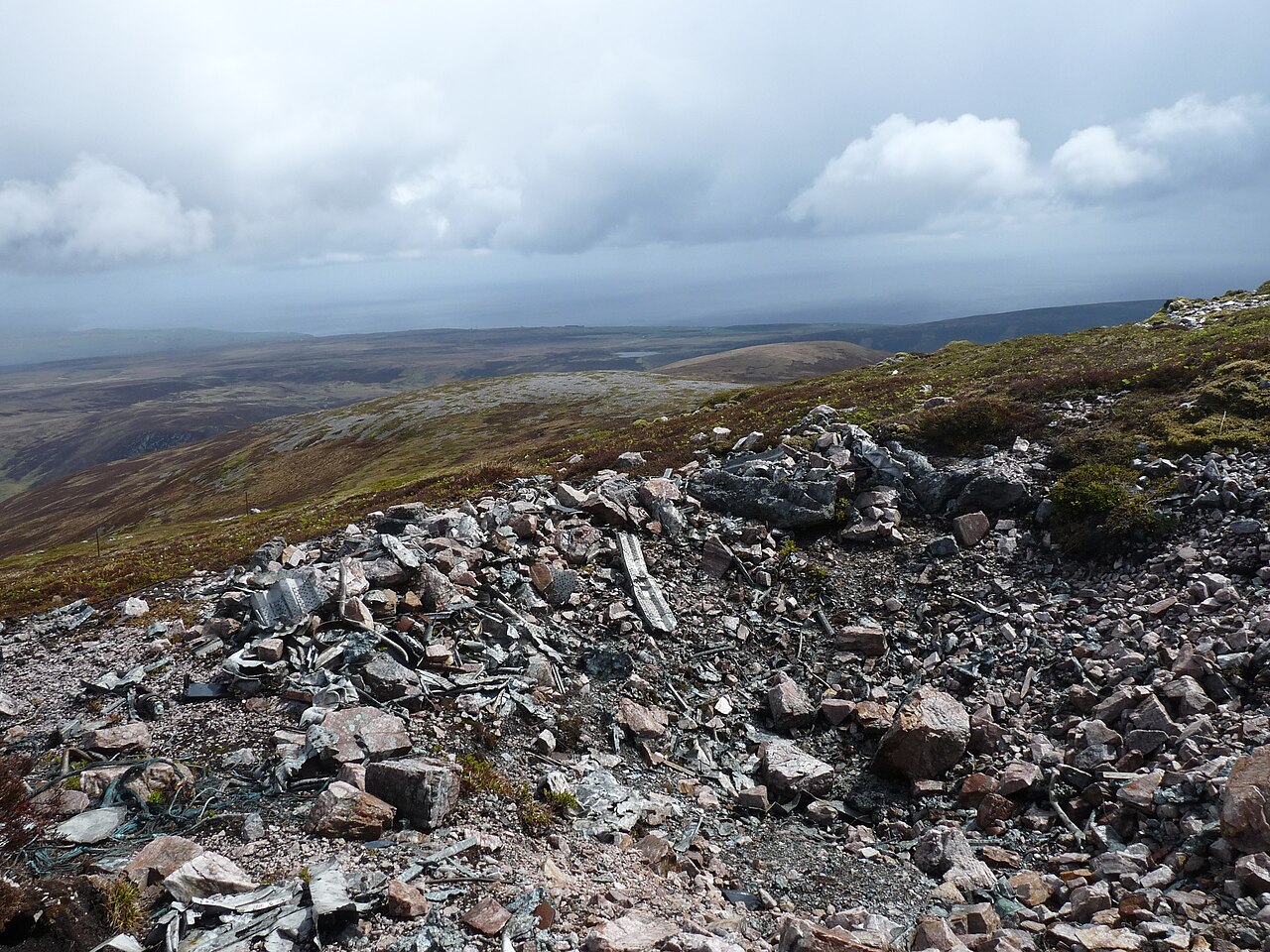
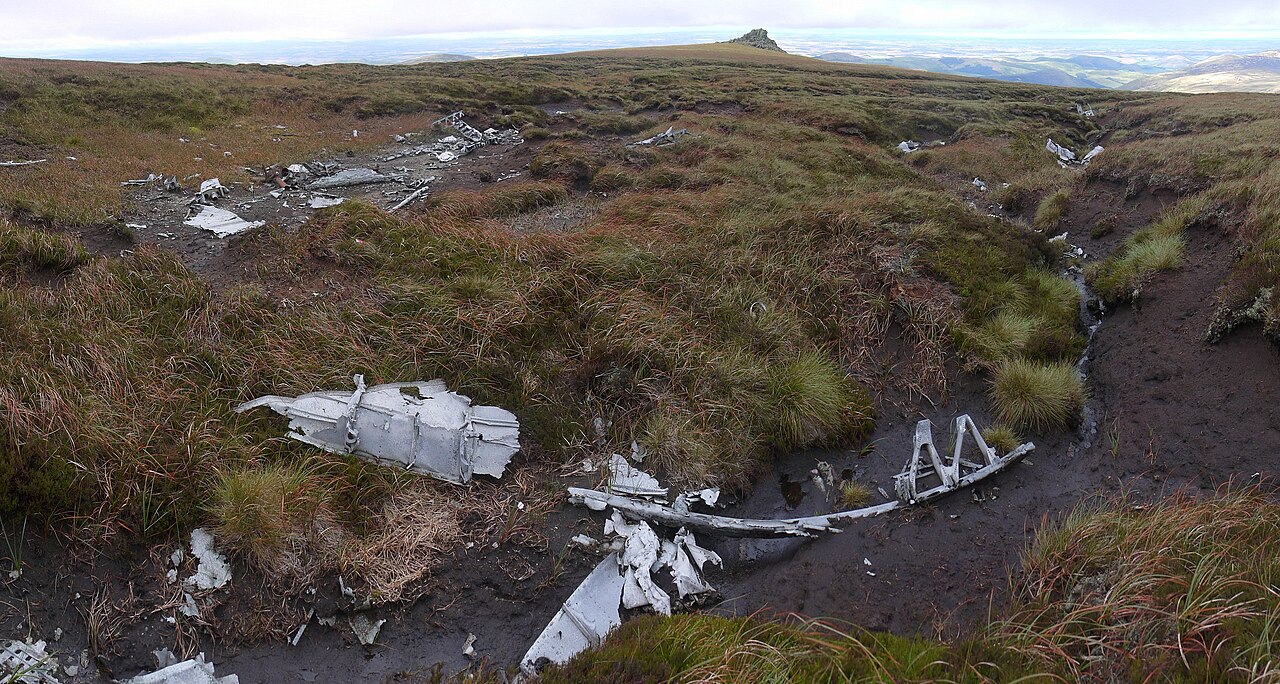
Claire Pegrum · CC BY-SA 2.0
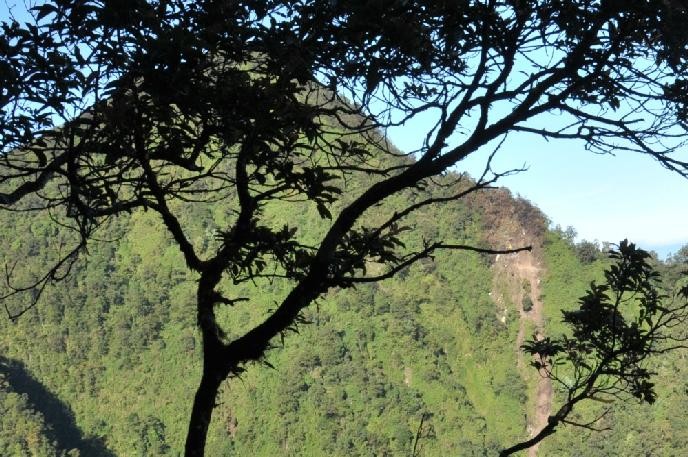
The Crash Site is the central 1996 setting of Yellowjackets, the remote Pacific Northwest ravine where a twin-engine charter plane carrying the high school girls' soccer team goes down in a tangle of pines and shattered fuselage. It is the physical anchor for the show's most visceral storyline: nineteen months of survival in a wilderness that behaves less like a forest and more like a fever dream, where paths loop, the light shifts without explanation, and something in the trees is watching. For the audience, the Crash Site functions as the show's emotional and supernatural engine. Every scar, every secret, every fractured friendship in the present-day timeline traces back to something that happened in that ravine or in the impossible woods beyond it. It is simultaneously the most grounded location in the series (mud, blood, a broken wing) and the least (the landscape rearranges itself, time stutters, and the boundary between the survivors' minds and the environment dissolves).
- Aircraft type
- Fairchild SA227 Metro II
- Occupants
- Yellowjackets soccer team, Coach Ben Scott, assistant coach Laura Lee, and the pilot
Lore & Background
The plane goes down in a narrow ravine ringed by Douglas firs, and the survivors drag themselves out of a fuselage that still smells of kerosene and scorched plastic. What follows is not a straightforward survival narrative. The wilderness around the Crash Site operates on a logic that resists cartography: a trail walked in one direction returns you to the same boulder, the canopy light shifts from gold to a sickly green without a cloud passing, and the distance between the wreckage and the tree line seems to stretch when the group is afraid and contract when they are calm. The show treats this as a fact of the place rather than a metaphor, and the characters react to it the way a hiker would react to a river changing course mid-walk—practical, irritated, and slowly terrified. The entity in the woods is never fully explained. It is felt more than seen: a pressure behind the eyes, a sound like breathing that isn't breathing, a shape at the edge of the firelight that resolves into a branch when you look directly. The survivors develop rituals around it—keeping the fire lit, not walking after dark, the unspoken agreement that certain groves are off-limits. These rules feel less like survival strategy and more like the etiquette of a place that has its own intentions. The Crash Site also carries the weight of the team's social dynamics. Coach Ben Scott's authority, the fractures between the players, the secrets they carry from before the crash—all of it is compressed and magnified in the ravine. The confined space forces confrontations that would otherwise stay buried for years, and the supernatural layer gives those confrontations a physical, almost theatrical charge. What happens in the woods doesn't stay in the woods; it bleeds into every present-day scene, every awkward dinner, every moment a survivor flinches at the smell of pine.
In Their Own Story
The fire is down to embers when Tabby notices the tree line has moved. Not much—maybe ten feet, maybe a hundred. The pines that were on her left when she walked out to gather kindling are now on her right, and the ravine wall is closer, the rock face sweating a cold moisture that smells like iron and crushed moss. She doesn't say anything. She never says anything. She just kicks the embers back to life, watches the sparks rise and die in air that feels too still, and counts the faces around the fire. Seven. Eight. She counts again. Seven. The woods hum a low, patient note, and somewhere beyond the treeline, something shifts its weight from one paw to the other and waits for the light to go.
Reader's Guide
The Crash Site itself is a wound in the ravine floor: a crumpled fuselage half-buried in loam, a torn wing jutting at an angle that catches the last of the afternoon sun and throws a long, thin blade of gold across the mud. The metal is warm to the touch even when the air is cold. Around it, the survivors have built a camp—tarps, a fire pit ringed with flat stones, a pile of salvaged belongings that looks like a small, sad village. The smell is permanent: wet bark, woodsmoke, the faint chemical tang of aviation fuel seeping from the wreckage. The wilderness beyond the camp is where the rules change. Paths that should lead to a ridge instead loop back to the same creek. The light doesn't follow the sun; it pools in groves like liquid amber and drains away when you step into it. The air tastes different here—metallic, sweet, like licking a battery wrapped in honey. Sound behaves strangely: a shout carries too far, a whisper is swallowed. The trees are the same species as any Pacific Northwest forest, but they stand too evenly, too deliberately, as if planted by a hand with a grid in mind. Deeper in, the supernatural thickens. A cave mouth appears where no cave should be, its breath cold and mineral. The ground softens to something that isn't quite mud. The entity's presence becomes a pressure in the sinuses, a half-heard rhythm that matches your own heartbeat a beat too slow. None of this maps. None of this repeats the same way twice. And when you finally stumble back to the ravine, the fire is still lit, the embers still warm, and the faces around it look up at you with the particular, exhausted relief of people who were not sure you would come back to the same world.
Did You Know?
- The show's 1996 storyline is intercut with a present-day timeline (early 2020s), meaning the Crash Site events are experienced as both immediate survival and long-term psychological aftermath.
- The wilderness's supernatural behavior is treated by the characters as a practical hazard—something to navigate and survive—rather than as a mystery to be solved, which makes the fear feel more intimate and less like a h
- The Crash Site's ravine geography is deliberately claustrophobic: the team is hemmed in by rock walls and dense canopy, which amplifies every interpersonal conflict and makes escape feel physically impossible even when i
- The show uses the crash site as a structural device: the same location is revisited across multiple seasons with different survivors, different secrets, and different rules, so the 'same' forest is never actually the sam
The Dual-Timeline Survival Story
In 1996, a high school girls' soccer team from the fictional town of Wiskayok, New Jersey, boards a flight to Seattle for a national championship tournament. What should be a triumphant journey instead ends in catastrophe when their plane goes down deep in the Canadian wilderness. The surviving players are stranded for nineteen months, and the show does not shy away from the extremities of their situation—some members of the group are driven to cannibalism as a means of staying alive. The narrative then leaps forward twenty-five years to 2021, where the same women are attempting to rebuild their lives, only to find that the trauma of those months in the wild continues to haunt their relationships, choices, and sense of self. This two-pronged structure allows the series to examine how a single catastrophic event can fracture a person across decades, with the past timeline grounding the audience in raw survival while the present timeline explores the long psychological aftershocks. The interplay between these eras is central to the show's identity as both a thriller and a character study.
From Pitch to Premiere: The Road to Showtime
Creators Ashley Lyle and Bart Nickerson drew inspiration from two real-world tragedies—the Andes flight disaster and the Donner Party—to craft a story that would probe the best and worst of human nature. Their concept was shaped by an interest in social hierarchies, the ways people project preconceived behaviors onto one another, and the lasting imprint of trauma on a person's life. The development path was anything but smooth. Lyle and Nickerson pitched their story to more than a dozen networks and collected offers from five, yet a number of those buyers passed, citing the story's darkness, its teenage protagonists, and the absence of any pre-existing intellectual property to anchor it. Showtime, however, backed the creators' vision and secured the rights in May 2018. The wait for audiences was long: the first season finally premiered on November 14, 2021, followed by a second season on March 26, 2023. Production on the third season was interrupted by the 2023 Hollywood labor disputes before it debuted on February 16, 2025. In May 2025, the series was renewed for a fourth and final season, scheduled to arrive on November 20, 2026.
An Ensemble Built on Duality
The series is structured around a large ensemble in which nearly every principal character is played by two actors: a teenage version during the 1996 wilderness arc and an adult counterpart in the 2021 timeline. The core group of surviving players is anchored by Sophie Nélisse, Jasmin Savoy Brown, Sophie Thatcher, and Samantha Hanratty in their younger roles, with Melanie Lynskey, Tawny Cypress, Juliette Lewis, and Christina Ricci stepping into the same characters as adults. This dual-casting approach means the audience sees the same person at two very different stages of life, amplifying the emotional weight of what was lost and what was carried forward. Additional characters round out the world: Steven Krueger plays the assistant coach, Warren Kole portrays the adult husband and boyfriend figure, and later seasons introduce new survivors such as Lottie and Van, played by Courtney Eaton and Liv Hewson as teenagers and Simone Kessell and Lauren Ambrose as adults. Special guest appearances—including Hilary Swank, Elijah Wood, and Molly Ringwald—add further layers to the expanding cast.
Critical Acclaim and Streaming Milestones
Critics have consistently praised the series for its strong performances, its layered mystery elements, and the way it weaves between past and present timelines. The show has accumulated ten Primetime Emmy Award nominations, including a bid for Outstanding Drama Series and acting nominations for both Melanie Lynskey and Christina Ricci. Beyond the Emmys, the series earned three Writers Guild of America Award nominations, five Television Critics Association Award nominations, a Peabody Award nomination, and a Critics' Choice Award. On the viewership front, Yellowjackets has become the second-most streamed series in Showtime's history, a remarkable achievement for a show that many networks initially passed on. The third season marked the series' highest viewership to date, suggesting that the audience grew more invested as the mysteries deepened and the characters' backstories unfolded. The renewal for a fourth and final season in May 2025 confirmed that the story still had significant narrative ground to cover, capping a run that balanced prestige television craft with the broad, bingeable appeal of a survival thriller.
Gallery
Frequently Asked Questions
Where does the plane crash in Yellowjackets?
The team's small single-engine aircraft goes down in a remote ravine deep in the Pacific Northwest, surrounded by dense pines and shattered fuselage debris. It is the fixed physical location for the entire 1996 survival storyline.
How many days do the girls survive in the wilderness?
The Yellowjackets endure exactly nineteen days trapped in the forest before escaping. Those days form the core of the show's past-timeline narrative.
Is the crash site in Yellowjackets actually supernatural?
Yes—the forest behaves erratically, with paths that loop back on themselves, light that shifts without any weather explanation, and a recurring presence lurking in the trees. Time itself seems unreliable during their stay.
Who is on the plane that crashes in Yellowjackets?
The entire girls' high school football squad plus their coach, Coach Clark, are the occupants of the small aircraft. They are the only people present at the site for the full nineteen-day survival arc.
Why is the crash site important to the whole show?
It serves as the emotional and supernatural engine for both timelines, since every trauma, secret, and bond formed in those nineteen days echoes into the present-day story. The forest essentially reshapes who the characters become after they leave.
More in World & Setting
Elsewhere in the Yellowjackets universe
Spotted an error? Know more?
This is a living reference — every entry is fact-audited, and reader corrections feed straight into our audit queue. Suggest an edit · See this site's audit record